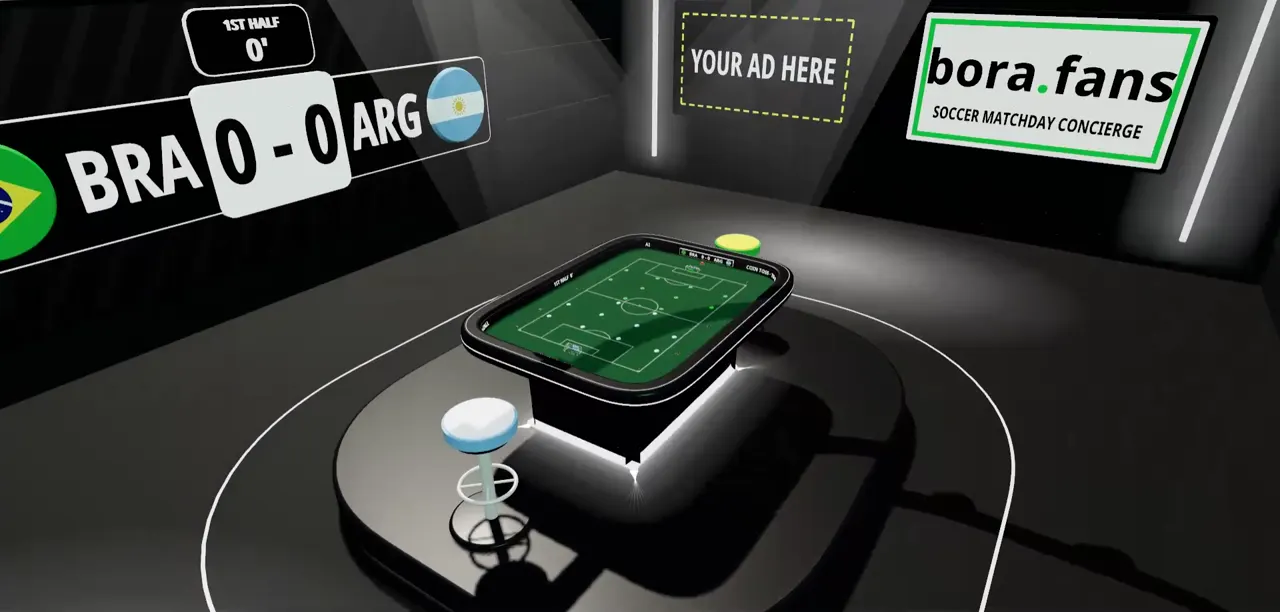
The room
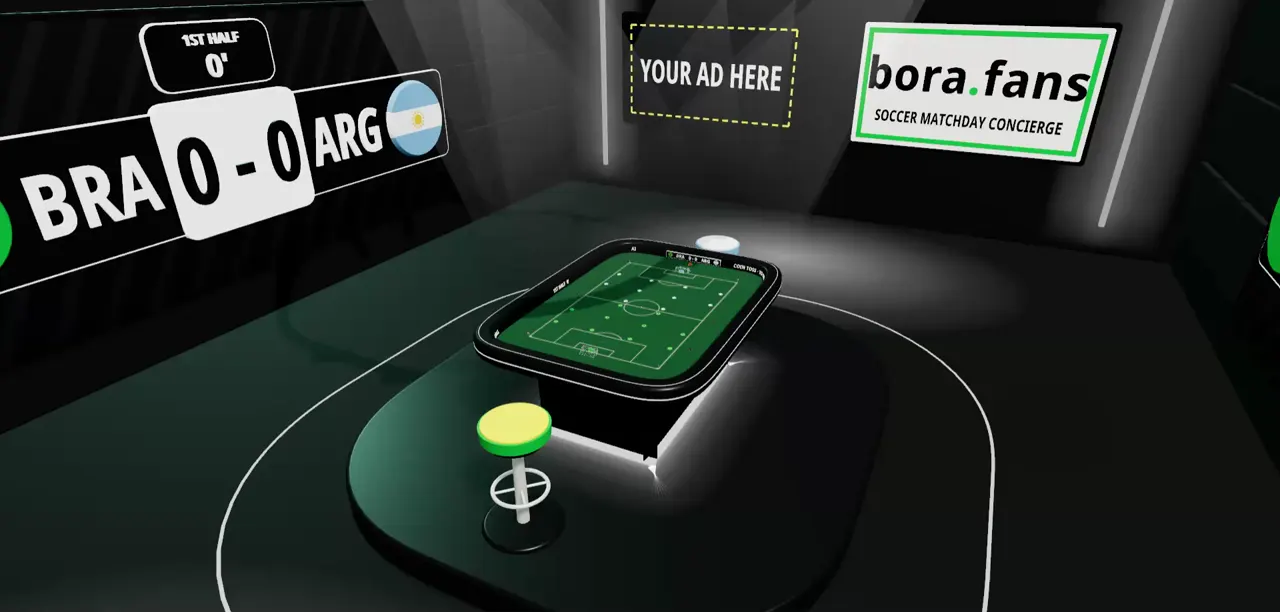
One table in one esports room: the lights, the screens, the scoreboard ribbon in 3D letters.
Button Soccer 3D
The classic button soccer game, remade in 3D.Free to play in your browser.
Laptop & desktop
Play now in your browser
Tablet & phone
Coming soon
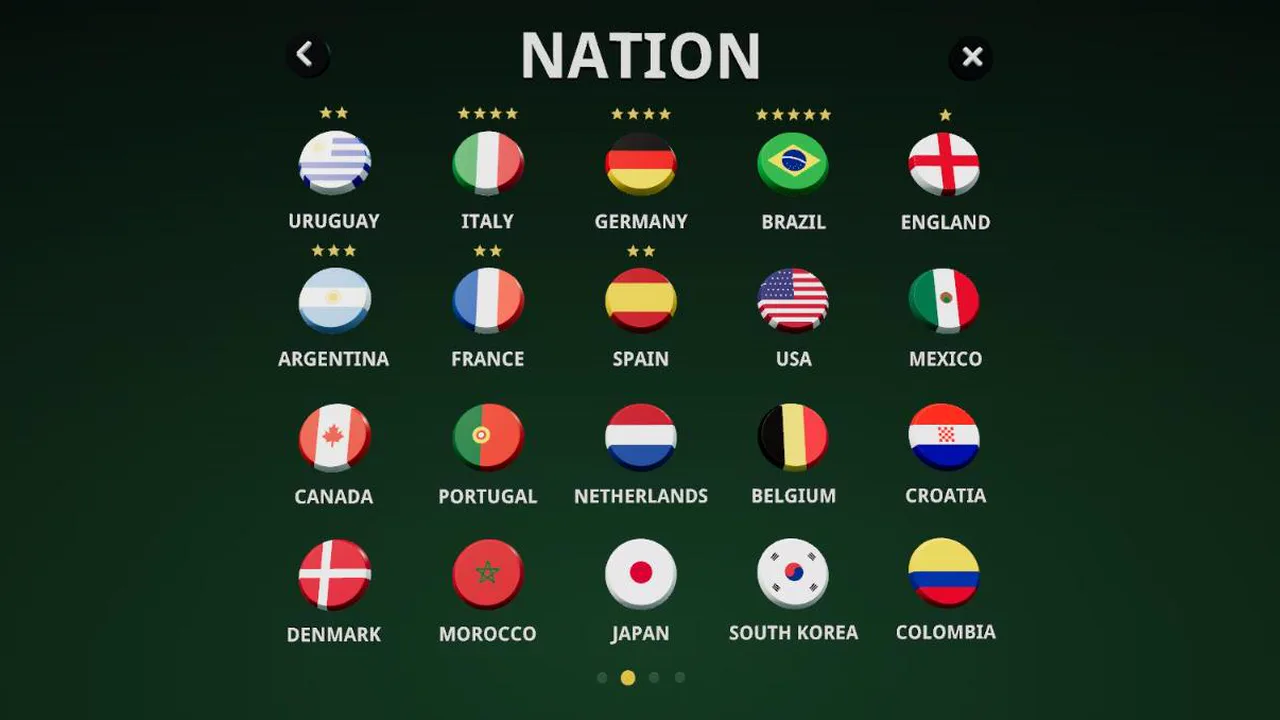
Every FIFA nation, 211 of them, each button carrying its flag, as the game turns them.
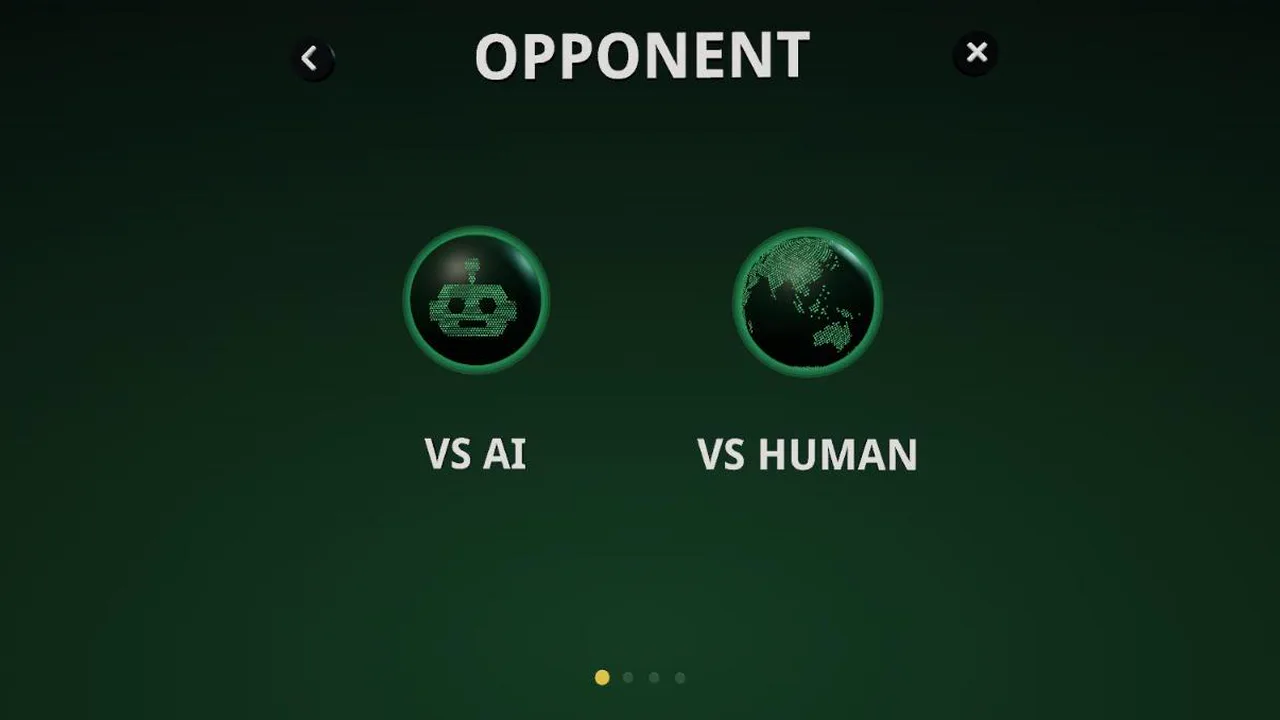
Opponent
Play the computer, or a friend on the same screen: VS AI or VS HUMAN.
Nation
Your nation's button, its flag wrapped round it and its World Cup stars over it.
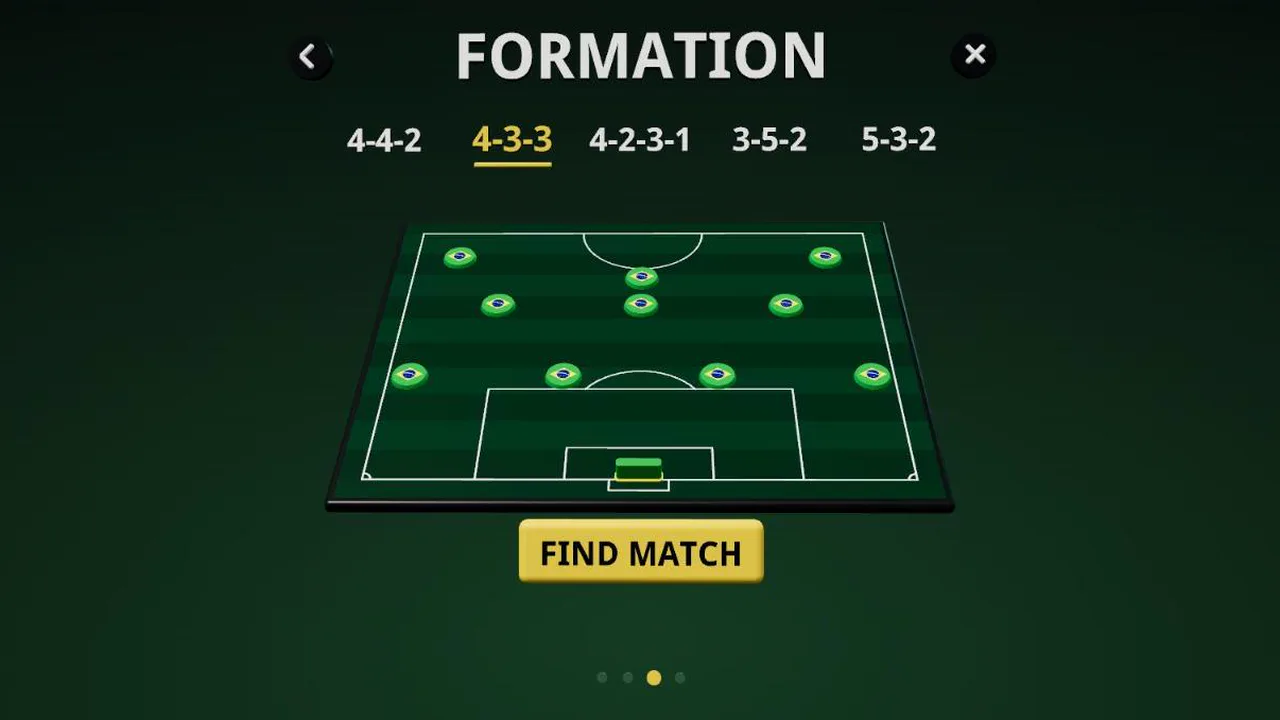
Formation
Choose from five classic formations and watch your team line up on the pitch.
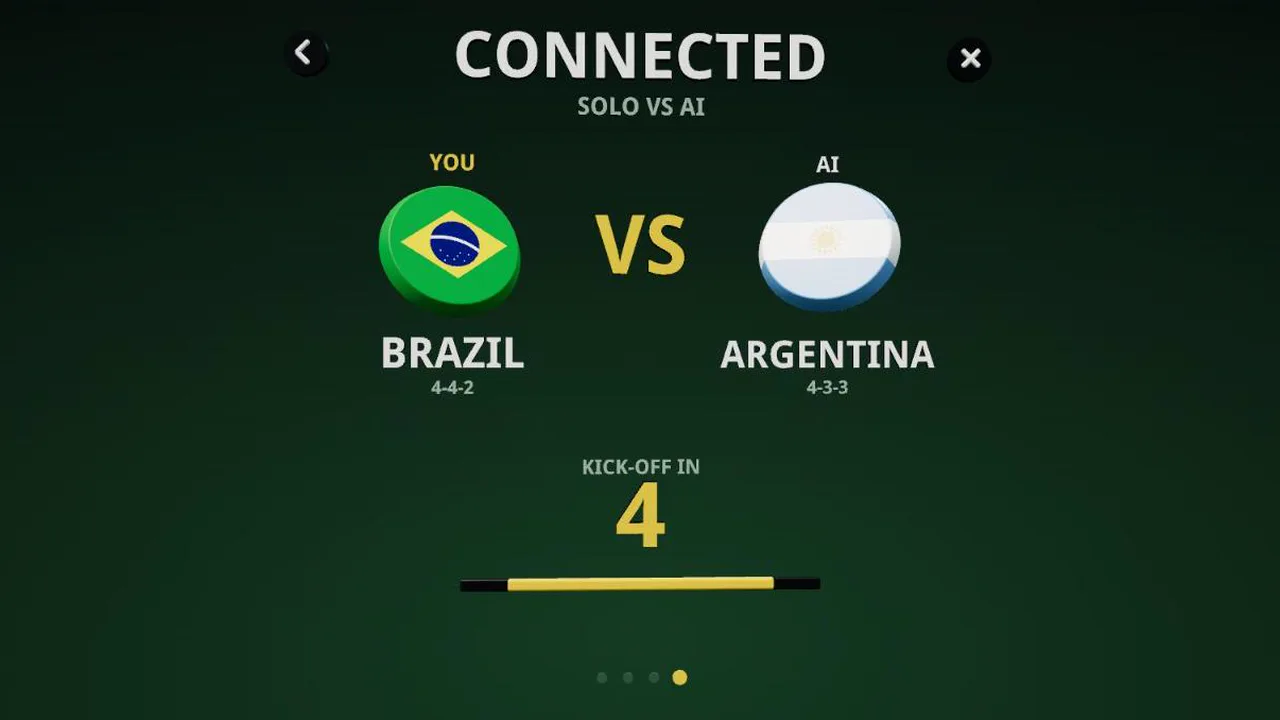
Kick-off
The computer finds you an opponent, both sides line up, and kick-off counts down.
Every flick in four moves, with a mouse or trackpad and a few keys.
Click one of your buttons. The camera flies to its shoulder, the ball ahead.
Click a spot on its rim: high on the edge chips the ball, low drives it on.
Press and drag: down for power, across to aim. The dots show where your button will run.
Let go and the flicker strikes. Hit the ball off-centre and it curls.
A smooth collectible-toy look, with the physics of the table and the presentation of a broadcast.
One table in one esports room: the lights, the screens, the scoreboard ribbon in 3D letters.
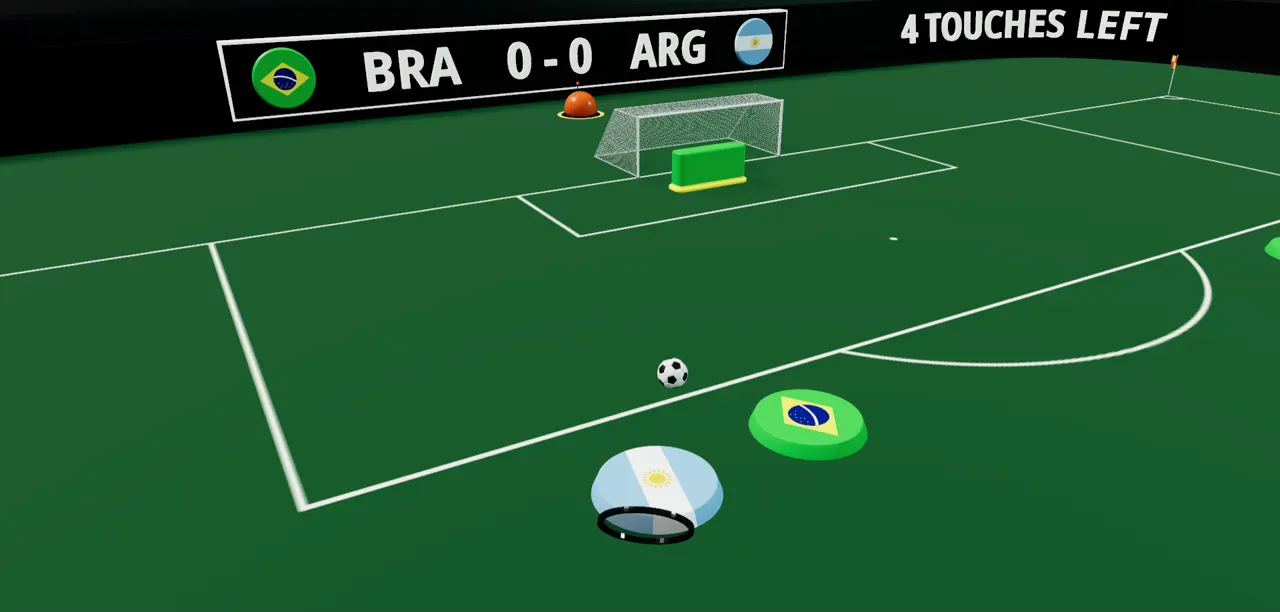
Buttons slide and spin, the ball skids, curls and chips; posts, a crossbar and nets that give.
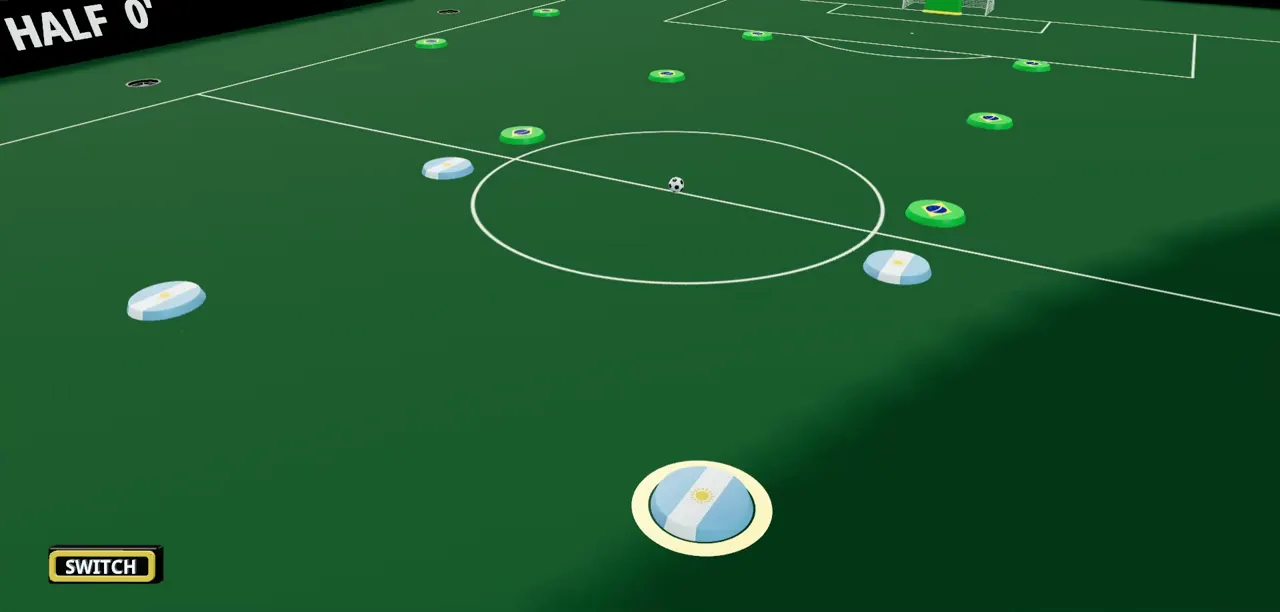
Drop to your button's shoulder, pull back for power, aim along its dotted run and let it fly.
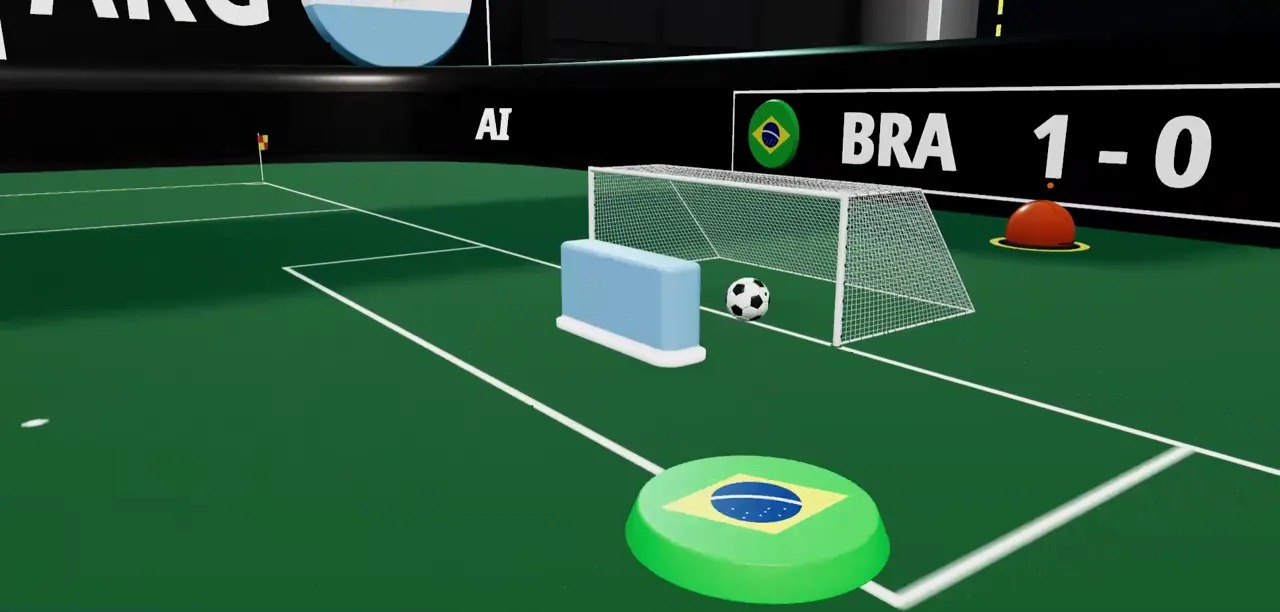
Every goal lights the room in the scorer's colours and plays again from the broadcast camera — saved automatically, ready to share.
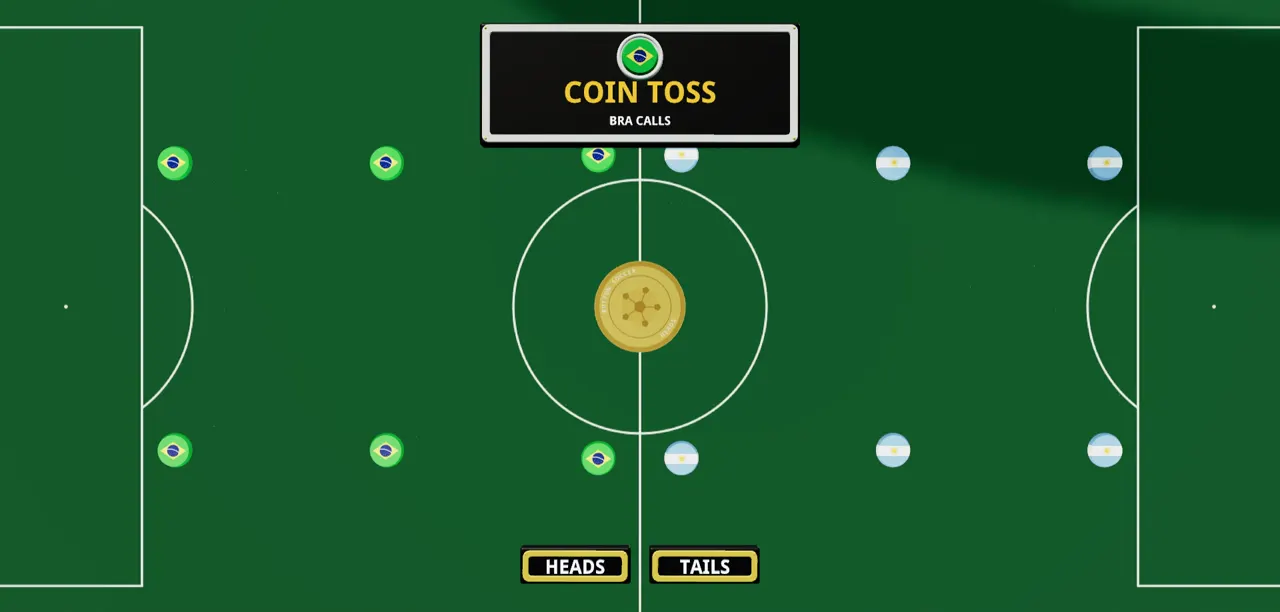
The coin toss, touches, fouls and penalties, corners, throw-ins and goal kicks, each placed.
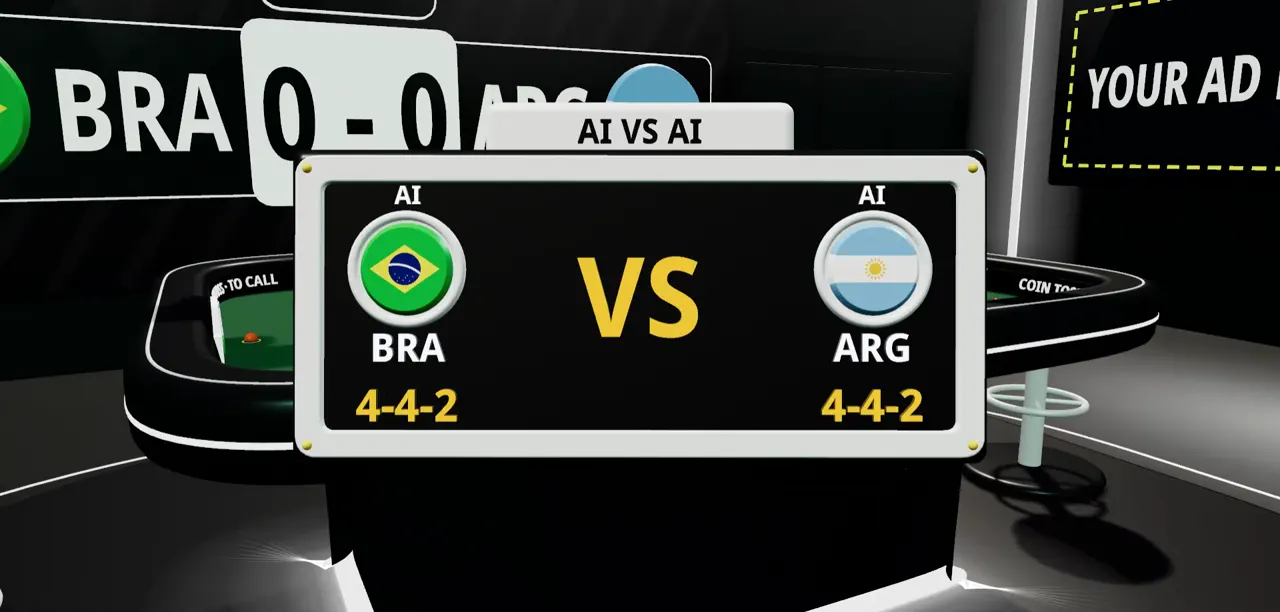
The computer reads the table, calls its shots and places its keeper, at a person's pace.
Button soccer as it's played on the table — against the computer, or a friend on the same screen.
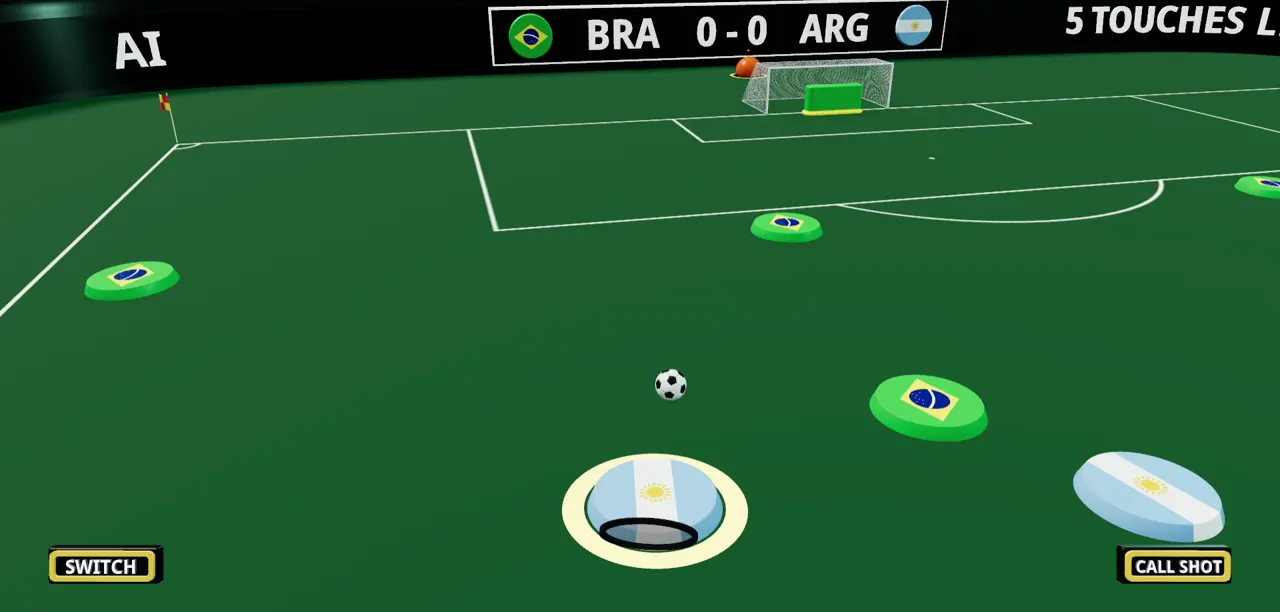
Call it, and the other side places its keeper on its line before you flick.
A foul gives the other side a free kick where it happened; its taker can't touch the ball again until a teammate has.
A foul in the box: one flick from the spot at the keeper on its line, and the taker can't play it again until the keeper has.
Off a defender over its own byline: a corner from the flag, and one straight in counts — the olympic goal.
Over the touchline: the ball set on the line where it crossed, and the other side plays it back in.
A robot drives out from behind the goal, fetches the ball and sets it on the spot.
Button soccer as the game plays it, from the coin toss to the final whistle.
Two halves of one minute each, on a clock that only runs while the ball is rolling.
When time is up, the half ends the next time the ball goes out of play.
A coin toss decides who kicks off the first half; the other side starts the second, and after a goal the side that conceded restarts.
Before kicking off, that side may move up to two buttons anywhere in its own half.
You have seven touches of the ball a turn.
A flick that misses the ball hands the turn to your opponent.
Only called goals count: call your shot from your opponent's half, and they place their keeper before you flick.
An uncalled goal is a goal kick to the defence — unless it's a corner straight in, the olympic goal.
A called shot that stays in play goes to your opponent unless a team-mate touched it last.
Hitting an opponent's button or keeper before the ball is a foul.
The fouled side takes a free kick where it happened, moving one button and its taker; buttons in the way are cleared.
A foul inside the box is a penalty: a called shot from the spot.
Every button leaves the area, the keeper waits on its line, and the taker stands anywhere behind the ball inside the box or the arc.
Over the touchline, it's a throw-in to the other side; over a byline, a corner or a goal kick, depending on who touched it last.
The Ball Retriever fetches the ball and sets it on its spot. A throw-in that doesn't reach a team-mate goes to the other side.
On a corner, both sides move up to three buttons, attackers first, then the keeper is placed.
On a goal kick, the attack moves up to four buttons and the keeper punts it with the boot. A ball that stops in a goal area is the keeper's.
After a corner, free kick or throw-in, the taker can't touch the ball again until a team-mate has; after a penalty, until the keeper has.
Breaking this gives the other side a free kick where it happened.
Button soccer grew up on Brazilian tabletops: two teams of flat buttons, struck with a small flicker into a little ball on a painted pitch.
Generations learned it on the kitchen table, and it grew into a sport of its own, with clubs, federations and championships. Cousins like Subbuteo carried the idea around the world.
Button Soccer 3D keeps its soul — the flicker, the touches, the called shot — and brings it to your screen.
Where Button Soccer 3D goes from here. Follow along for each one as it lands.
Play a friend anywhere, with matchmaking and spectating.
Ranked matches played on skill alone: no dotted run for your button and no arrow for the ball.
Rank against players around the world, and see where your nation stands.
Touch controls built for smaller screens: a thumb-sized pull and pinch to zoom.
Club sides back in the game, alongside every nation.
*Subject to licensing.
The game speaks your device's language: English, Portuguese and Spanish to start, then every major language.
Football on a table: flat buttons for players, flicked into a ball. It grew up in Brazil; Subbuteo-style table football is its cousin elsewhere.
Yes: every side, every formation and the computer opponent, with no account and nothing to install.
A laptop or desktop with a recent browser — Chrome, Edge or Firefox — and a mouse or trackpad. Tablets and phones are coming soon.
Not yet: two players share one screen, taking turns. Online matches are on the way.
Not yet: for now it plays fully on a laptop or desktop. Tablets and phones are coming soon.
Two halves, the clock running only while the ball rolls in play — a few minutes a match.
Opponent
Play the computer, or a friend on the same screen: VS AI or VS HUMAN.
Nation
Your nation's button, its flag wrapped round it and its World Cup stars over it.
Formation
Choose from five classic formations and watch your team line up on the pitch.
Kick-off
The computer finds you an opponent, both sides line up, and kick-off counts down.
Every flick in four moves, with a mouse or trackpad and a few keys.
Click one of your buttons. The camera flies to its shoulder, the ball ahead.
Click a spot on its rim: high on the edge chips the ball, low drives it on.
Press and drag: down for power, across to aim. The dots show where your button will run.
Let go and the flicker strikes. Hit the ball off-centre and it curls.
Button soccer as it's played on the table — against the computer, or a friend on the same screen.
Call it, and the other side places its keeper on its line before you flick.
A foul gives the other side a free kick where it happened; its taker can't touch the ball again until a teammate has.
A foul in the box: one flick from the spot at the keeper on its line, and the taker can't play it again until the keeper has.
Off a defender over its own byline: a corner from the flag, and one straight in counts — the olympic goal.
Over the touchline: the ball set on the line where it crossed, and the other side plays it back in.
A robot drives out from behind the goal, fetches the ball and sets it on the spot.
Button soccer as the game plays it, from the coin toss to the final whistle.
Two halves of one minute each, on a clock that only runs while the ball is rolling.
When time is up, the half ends the next time the ball goes out of play.
A coin toss decides who kicks off the first half; the other side starts the second, and after a goal the side that conceded restarts.
Before kicking off, that side may move up to two buttons anywhere in its own half.
You have seven touches of the ball a turn.
A flick that misses the ball hands the turn to your opponent.
Only called goals count: call your shot from your opponent's half, and they place their keeper before you flick.
An uncalled goal is a goal kick to the defence — unless it's a corner straight in, the olympic goal.
A called shot that stays in play goes to your opponent unless a team-mate touched it last.
Hitting an opponent's button or keeper before the ball is a foul.
The fouled side takes a free kick where it happened, moving one button and its taker; buttons in the way are cleared.
A foul inside the box is a penalty: a called shot from the spot.
Every button leaves the area, the keeper waits on its line, and the taker stands anywhere behind the ball inside the box or the arc.
Over the touchline, it's a throw-in to the other side; over a byline, a corner or a goal kick, depending on who touched it last.
The Ball Retriever fetches the ball and sets it on its spot. A throw-in that doesn't reach a team-mate goes to the other side.
On a corner, both sides move up to three buttons, attackers first, then the keeper is placed.
On a goal kick, the attack moves up to four buttons and the keeper punts it with the boot. A ball that stops in a goal area is the keeper's.
After a corner, free kick or throw-in, the taker can't touch the ball again until a team-mate has; after a penalty, until the keeper has.
Breaking this gives the other side a free kick where it happened.
A smooth collectible-toy look, with the physics of the table and the presentation of a broadcast.
One table in one esports room: the lights, the screens, the scoreboard ribbon in 3D letters.
Buttons slide and spin, the ball skids, curls and chips; posts, a crossbar and nets that give.
Drop to your button's shoulder, pull back for power, aim along its dotted run and let it fly.
Every goal lights the room in the scorer's colours and plays again from the broadcast camera — saved automatically, ready to share.
The coin toss, touches, fouls and penalties, corners, throw-ins and goal kicks, each placed.
The computer reads the table, calls its shots and places its keeper, at a person's pace.
Button soccer grew up on Brazilian tabletops: two teams of flat buttons, struck with a small flicker into a little ball on a painted pitch.
Generations learned it on the kitchen table, and it grew into a sport of its own, with clubs, federations and championships. Cousins like Subbuteo carried the idea around the world.
Button Soccer 3D keeps its soul — the flicker, the touches, the called shot — and brings it to your screen.
On the tableA table, two sets, a ball, a flicker
Button Soccer 3DA browser tab
On the tableSomeone fetches the ball
Button Soccer 3DThe Ball Retriever fetches it
On the tableGone in a second
Button Soccer 3DA light show and a replay
On the tableThe sets you own
Button Soccer 3DEvery FIFA nation
On the tableNo match
Button Soccer 3DThe computer's ready
Where Button Soccer 3D goes from here. Follow along for each one as it lands.
Play a friend anywhere, with matchmaking and spectating.
Ranked matches played on skill alone: no dotted run for your button and no arrow for the ball.
Rank against players around the world, and see where your nation stands.
Touch controls built for smaller screens: a thumb-sized pull and pinch to zoom.
Club sides back in the game, alongside every nation.
*Subject to licensing.
The game speaks your device's language: English, Portuguese and Spanish to start, then every major language.
Football on a table: flat buttons for players, flicked into a ball. It grew up in Brazil; Subbuteo-style table football is its cousin elsewhere.
Yes: every side, every formation and the computer opponent, with no account and nothing to install.
A laptop or desktop with a recent browser — Chrome, Edge or Firefox — and a mouse or trackpad. Tablets and phones are coming soon.
Not yet: two players share one screen, taking turns. Online matches are on the way.
Not yet: for now it plays fully on a laptop or desktop. Tablets and phones are coming soon.
Two halves, the clock running only while the ball rolls in play — a few minutes a match.
What Button Soccer 3D is, and who makes it.
Button Soccer 3D is the classic button soccer game remade in 3D: two teams of flat buttons, a ball and a flick, on one table in one esports room. It's free, and it plays in your browser against the computer or a friend on the same screen.
It's made by Jaffe Games, the games label of Jaffe Systems, a software studio. The game is written in Rust and runs as WebAssembly in your browser, so there's nothing to install, and it's served from Cloudflare's edge, close to wherever you play.
Button Soccer 3D isn't affiliated with FIFA, any confederation or any national federation. The nations' names and flags are there to tell the sides apart.
Updated October 6, 2026
The boards round the room are for sponsors — once there's something to measure.
Every match is played in one esports room, and the boards round its walls are in shot the whole game: from the broadcast camera, from your button's shoulder and in every replay.
Today they carry bora.fans, a sister product from the same studio, and a YOUR AD HERE board waiting for the first sponsor.
We haven't published a rate card: a price needs audited numbers behind it, and we don't have them yet. Until then, proposals are welcome.
Updated October 6, 2026
Everything to write about the game, in one place.
The kit carries the logo, the button and ball mark, screenshots and video captured from the game, and a paragraph on the game and the studio.
Every picture is the game as it plays, never a mock-up. Use them as they are, with credit to Jaffe Games.
The download goes here when the kit is published. Until then, write for anything you need.
Updated October 6, 2026
For questions, corrections and partnerships.
Found a bug, a rule the game plays wrong, or a flag with a stripe out of place? Write in — a correction is the message we like getting most.
This is also the place for partnerships, for button football clubs and federations who'd like to play, and for anything else.
Updated October 6, 2026
What the game keeps about you: nothing.
You don't need an account to play: no name, no email, no password. Until accounts arrive, the game stores nothing about who you are; when they do, this page will say what an account keeps before anyone can make one.
Nothing is kept in your browser either: no cookies and no local storage. Close the tab and the match is gone.
When you find a match, the game shows the rough region you're playing from, to about 450 km and never your city. Cloudflare, which serves the game, works it out from your connection; the game shows it and stores none of it.
Cloudflare sees your IP address, as any host does, and handles it under its own privacy policy. The game's typefaces come from Google Fonts, which sees the request for them.
Questions about your data are welcome at any time.
Updated October 6, 2026
The rules of use, no fine print.
Button Soccer 3D is free to play, with nothing to buy. The boards round the room may carry sponsors — that's what keeps it free.
The game is offered as it is. We work to keep it running and its rules right, and it can still have a bug, an outage, or a rule it plays differently from your table at home.
Play fair: don't attack the game or its servers, and don't try to get into anything that isn't yours.
The game, its code, its look and its words belong to Jaffe Games. The nations' names and flags identify the sides and belong to their nations; Subbuteo and the other names mentioned belong to their owners.
Updated October 6, 2026
There are none.
Button Soccer 3D sets no cookies: no analytics, no advertising, no social-network pixels. That's why there's no cookie banner — there's nothing to consent to.
It keeps nothing in your browser's storage either. Your choices for a match — your opponent, your nation, your formation — last as long as the tab.
Two outside services load with the page: Cloudflare, which serves it, and Google Fonts, which serves its typefaces. Each follows its own policy.
Updated October 6, 2026
Account
For ranked games and the global leaderboard, as they arrive. Every match is free without one.
Already have an account? Sign in